Exploring the Financial District
Lower Manhattan’s Financial District is often described as serious, fast-paced, and historic — and all of that is true. But spend even a short afternoon walking its streets and you’ll notice something else: it’s layered. Old stone façades sit beside glass towers. Quiet plazas open up between narrow colonial streets. And the waterfront is never far away.
Whether you’re starting on Water Street or arriving via the South Ferry terminal, the neighborhood rewards slow exploration.
A Walk Through Layers of History
The Financial District is one of the oldest parts of New York City. Streets like Stone Street and Pearl Street trace patterns that predate the grid system. You can feel the contrast between modern office towers and remnants of early New Amsterdam as you move between blocks.
From Water Street, it’s an easy walk west toward:
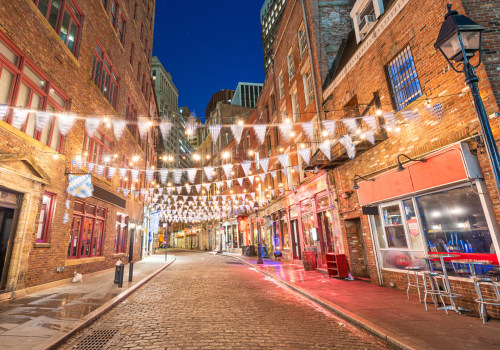
Stone Street, a cobblestone corridor lined with restaurants and low-rise buildings.
Fraunces Tavern, one of the city’s oldest surviving structures.
Federal Hall, marking the site of George Washington’s inauguration.
Even the smaller side streets reveal plaques, statues, and architectural details that many commuters walk past daily.
The Waterfront Perspective
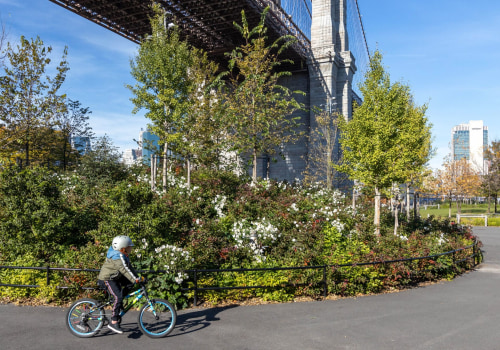
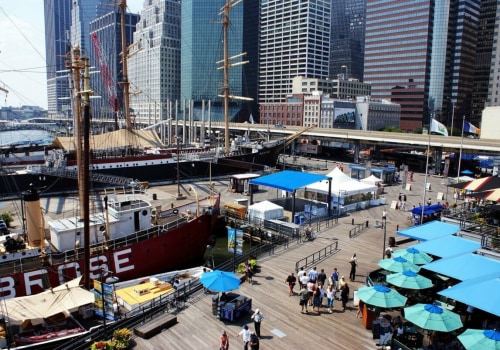
Head east and you’ll find the East River just beyond the towers. The South Street Seaport area adds a maritime dimension to the neighborhood — restored ships, open piers, and views toward Brooklyn.
Battery Park, to the south, offers a completely different atmosphere: open lawns, harbor breezes, and a direct line of sight to the Statue of Liberty.
The contrast between compressed streets and open waterfront is part of what makes the Financial District so interesting to explore.
Architecture Worth Noticing
It’s easy to look up here — and you should.
From ornate early 20th-century skyscrapers to sleek contemporary glass buildings, the skyline reflects more than a century of ambition. Trinity Church’s spire still cuts through the surrounding towers, and hidden courtyards appear where you least expect them.
Even everyday details — ironwork, carved stone, old signage — tell stories about earlier eras of the city.
Day vs. Night
The Financial District feels different depending on when you visit.
Weekdays bring commuters, suited professionals, and busy sidewalks. Early mornings are quiet and reflective. Evenings and weekends feel surprisingly relaxed, especially along the waterfront and on Stone Street.
That shifting rhythm is part of the charm.
A Neighborhood That Keeps Changing
While finance remains central to the area’s identity, the district has evolved. Residential conversions, small businesses, waterfront programming, and public art installations continue to reshape the neighborhood’s character.
What was once almost exclusively office towers now includes restaurants, cultural programming, and pedestrian-friendly spaces.
Exploring the Financial District doesn’t require an agenda. Start on Water Street, wander west toward Broadway, loop down toward the harbor, and let the streets guide you.
In a city known for constant motion, Lower Manhattan holds layers of stillness, history, and perspective — if you take the time to look.